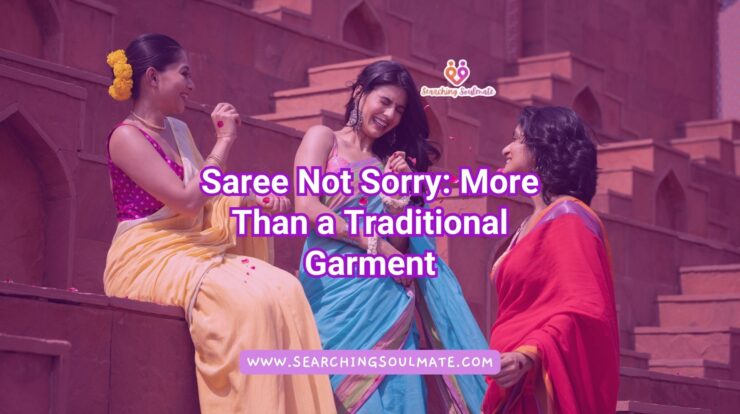
What comes to your mind when you think of a saree? Tradition, culture, family, celebrations? Or could it also represent confidence, identity and the freedom to choose who you want to be? For generations, the saree has been part of women’s lives in ways that go beyond clothing. It may remind someone of watching her mother get ready for work, helping her grandmother fold a favourite saree, wearing one for the first time at college, or dressing up for an important occasion. But today, women are wearing sarees not only at weddings and festivals, but also at workplaces, creative spaces, social gatherings and professional events. As women’s lives have evolved, so has the meaning of the saree.
Is a Saree Just Traditional Clothing?
A saree carries history, culture and heritage, but that does not mean it belongs only to the past. Its meaning changes with the woman wearing it. For one, it may represent her roots; for another, it may bring back memories of home; someone else may simply love the way she feels in it. Imagine a woman wearing her mother’s old saree to an important presentation at work. The saree may carry the memory of another generation, but she is creating a completely new story in it. That is what makes the saree so personal. It can hold on to tradition while still reflecting the individuality and life of a modern woman.
What Does a Saree Represent for Modern Women?
The connection between saree and confidence goes far beyond appearance. Confidence can come from feeling comfortable with your choices and having the freedom to express yourself. A woman may wear a saree because it connects her to her culture, because it makes her feel confident, or simply because she loves it. There is no single meaning attached to it.
For modern women, a saree can represent:
- Identity: A connection to culture, heritage and personal history.
- Confidence: Feeling comfortable and assured in what you choose to wear.
- Self-expression: Using colour, fabric, draping and styling to reflect your personality.
- Individuality: Making a traditional garment your own instead of wearing it to meet expectations.
This is also why traditional clothing and modern confidence do not have to be opposites. A confident woman can be a founder building a business, a professional growing in her career, a homemaker pursuing something of her own, someone returning to work after a break, or someone changing direction completely. She can value tradition while still questioning expectations. She can respect where she comes from while deciding where she wants to go.
That is the deeper idea behind Saree Not Sorry. It is not about apologising for wearing a saree; it is about not apologising for the choices that make you who you are. Women are often asked to explain why they chose a particular career, left a job, returned to work, changed direction or decided to prioritise themselves. But a woman does not have to fit into one definition of success or one expected role. She can be ambitious, traditional, independent, uncertain, successful or still figuring things out. She does not have to be only one thing.
Every Woman Has a Story
The woman behind the saree is always more interesting than the garment itself. We may see someone’s career, confidence or achievements, but we rarely know what it took to reach that point. A woman who appears successful may have faced rejection; someone who seems confident may have spent years doubting herself; another may have started over after realising that the path she was following no longer felt right. And there is also the woman who is still figuring out what comes next. Her story matters just as much.
This is where saree as self-expression becomes more meaningful. What we wear can reflect who we are, but self-expression also lives in the choices we make, the boundaries we set and the paths we create for ourselves. A saree can become the starting point for that expression, but the conversation around it can create something deeper.
When women come together, they may discover that their lives are not as different as they first appear. Imagine two women meeting at an event because they are both wearing sarees. One may be a founder who left a secure corporate career to build her own business, while the other may have recently returned to work after a career break. Their journeys look different, but a conversation about uncertainty, expectations and choosing a new path could reveal a shared experience. The saree brings them into the same space; their stories create the connection.
Choosing Yourself Without Apology
Ultimately, Saree Not Sorry by Searching Soulmate is about much more than a traditional garment. It is about creating a space where women can come together, express themselves, share their stories and connect beyond appearances and labels. Choosing yourself does not mean ignoring your responsibilities or the people around you. It means recognising that your own voice deserves a place too. It could mean pursuing a career you genuinely want, returning to work, starting something new, setting a boundary or simply giving yourself permission to change.
And perhaps that is the real meaning of Saree Not Sorry. The saree may tell a story about where a woman comes from, but the woman wearing it tells the story of where she is going. Through Searching Soulmate’s Saree Not Sorry, the celebration becomes an opportunity to honour those stories, conversations, choices and connections.
Because sometimes, the most powerful thing a woman wears is not the saree itself. It is the confidence to be herself, choose her own path and live her story without apology.