That “I’m Fine” We Say Too Often
Have you ever felt emotionally tired without a clear reason? Not physically exhausted, but mentally drained… like something is quietly weighing on you, and you can’t fully explain it. And when someone casually asks, “Are you okay?”, the automatic response comes out – “Yeah, I’m fine.” But somewhere inside, you know that’s not completely true.
The reality is, many women are not struggling because they are incapable of handling life. They are struggling because they have been handling too much, for too long, without having a space where they can simply put their guard down. This is where the connection between women support groups and mental health becomes important to understand. It’s not just about talking to people; it’s about having the right kind of space where you don’t have to filter your emotions.
The Invisible Emotional Load Women Carry
If you really observe everyday life, women often become emotional anchors in different roles. They listen, they adjust, they manage relationships, and they carry emotional weight not just for themselves but for others too. Over time, this becomes so normal that many don’t even realize how much they are holding internally. There is a silent expectation — be calm, be understanding, don’t overreact. And slowly, instead of expressing emotions freely, many women learn to manage them quietly.
But emotions don’t disappear just because they are managed. They stay, they build up, and they often show up as stress, overthinking, or emotional fatigue. This is why women’s support groups’ aid in better mental health is not just a trending conversation; it is a real need. Because when there is no safe outlet, even strong people start feeling overwhelmed.
Why the Right Conversations Feel Different
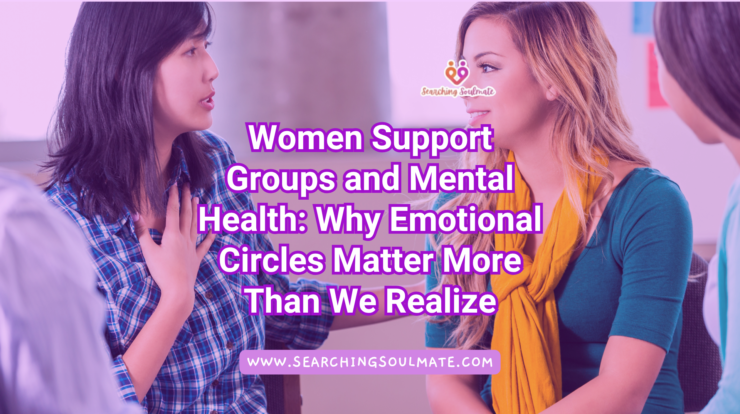
What makes a real difference is not just talking, but who you are talking to. Not every conversation creates relief. You can share something and still feel misunderstood. But in the right support circle, something shifts. You don’t get immediate advice, you don’t get judged, and you are not told that you are overthinking. Instead, you are simply heard. And that feeling — of being heard without being corrected — is rare.
There’s a very common pattern many women fall into. “I’ll handle it.” “It’s okay.” “I don’t want to bother anyone.” And slowly, this becomes the habit of saying “I’m fine” even when things are not fine. As we often hear in movies, “Kisi ko bata dene se problem solve nahi hoti… par dil halka zaroor ho jata hai.” That lightness matters more than we realize. Because emotional release is not always about fixing things, sometimes it’s about not carrying everything alone.
From Holding Everything In to Letting It Out
In the context of women’s support groups for mental health, this emotional release becomes easier. Because in a safe circle, you don’t have to present a perfect version of yourself. You don’t have to structure your thoughts properly or say things in the “right way.” You can be confused, emotional, unsure — and still be accepted. That acceptance slowly creates emotional safety, something that is missing in many family or professional gatherings.
Another important shift that happens in such circles is internal. When a woman speaks openly and is not dismissed or interrupted, she begins to trust her own voice again. And that trust builds a different kind of confidence. Not the loud, external confidence we usually talk about, but a quiet inner clarity — the ability to express without fear. This is one of the most underrated benefits of women’s support groups, because it impacts not just emotions but also how a person shows up in life.
Not Every Circle Feels Safe
It is also important to understand that not every group automatically becomes a safe space. The difference lies in the environment. A supportive circle does not compete, compare, or invalidate. It creates room for everyone to be themselves. Because the wrong environment can make someone shut down even more, but the right one can make them open up without hesitation.
Maybe the real question we need to ask is not whether women are strong enough to handle their emotions. They already are. The question is — are they given enough spaces where they don’t have to handle everything alone?
Maybe This Is What Mental Health Really Needs
Mental health is often seen as an individual responsibility — journaling, self-work, staying strong. All of that matters. But what we often overlook is the role of emotional support systems. The kind of people we have around us directly affects how safe we feel to express ourselves.
And that’s why such spaces created just for women are not just about connection; it’s about emotional survival in a fast-moving, high-pressure world. Sometimes, healing doesn’t begin with a big change. It begins in a simple moment, when someone listens without interrupting, understands without judging, and makes you feel that you don’t have to say “I’m fine” when you’re not.
Because maybe, at the end of the day, what most people really need is not advice. It’s a space where they can finally be honest.
Read more from Searching Soulmate:
- The Power of Female Friendship- Why Your Girlfriends Are Your Secret Weapon for a Happy Life
- Personal Transformation Stories: Women Who Walked Away:From Breakdown to Breakthrough
- Loneliness in a Relationship — The Silent Crisis We Rarely Admit
Follow Our Socials: